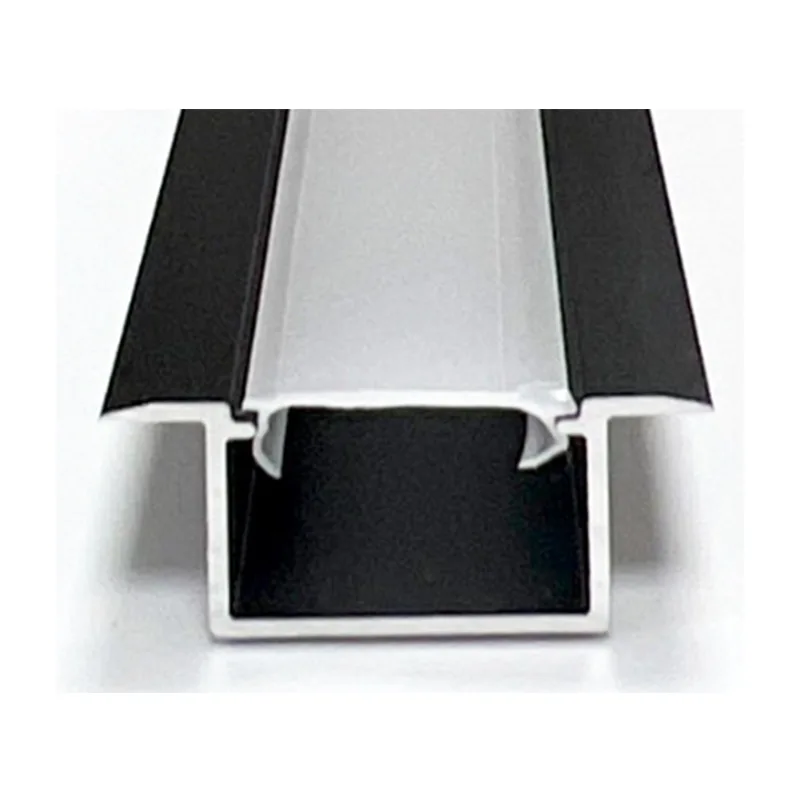
U-shaped LED Channel from Hizete is an aluminum profile designed to house and protect LED strip lights while providing a clean installation structure and effective heat dissipation. Its straight U-shaped profile is suitable for cabinet lighting, furniture lighting, display systems, wall lighting, ceiling applications, and other linear lighting projects.
For lighting manufacturers, furniture companies, interior contractors, and distributors, selecting an LED channel requires more than checking its appearance. Internal width, profile depth, LED strip compatibility, diffuser design, thermal performance, installation method, and surface finish all affect the final lighting result. A properly matched aluminum channel can improve LED strip protection, installation consistency, and the overall appearance of a finished lighting system.
A U-shaped LED channel is an aluminum extrusion with an open central cavity for installing LED strips. The profile provides a defined mounting area for the light source and can be combined with a diffuser to create a more finished linear lighting structure.
Compared with installing an LED strip directly onto a surface, an aluminum profile can provide additional mechanical protection and help organize the position of the LED strip. It also creates a larger metal surface around the LED strip that can assist with heat dissipation during continuous operation.
The U-shaped structure is particularly suitable for straight lighting lines. It can be incorporated into cabinets, shelves, furniture, architectural surfaces, retail displays, and decorative interior structures where a neat and consistent lighting line is required.
| Parameter | Specification / Option | Buyer Consideration |
|---|---|---|
| Product Name | U-shaped LED Channel | Aluminum profile for LED strip installation |
| Brand | Hizete | Aluminum profile manufacturer and supplier |
| Profile Type | U-shaped aluminum profile | Suitable for straight linear lighting |
| Material | Extruded aluminum | Provides structural support and heat dissipation |
| LED Strip Compatibility | Determined by internal channel width | Confirm actual LED strip PCB/FPC width before ordering |
| Diffuser | Compatible diffuser according to profile configuration | Helps protect the strip and control light distribution |
| Installation | Surface-mounted or recessed, depending on model | Select according to the substrate and project design |
| Surface Finish | According to customer requirements | Consider appearance and application environment |
| Length | Standard or customized | Confirm transportation and installation requirements |
| Applications | Cabinets, furniture, shelves, displays, walls, ceilings | Suitable for residential and commercial interiors |
Exact profile dimensions, aluminum alloy, compatible LED strip width, diffuser specification, standard length, surface finish, and accessory configuration should be confirmed with Hizete according to the selected model and project requirements.
Flexible LED strips can be installed directly onto many surfaces, but the strip may become exposed to physical contact, dust, or accidental movement. An aluminum channel provides a defined installation area that keeps the strip aligned along the lighting route.
This is useful for applications where the LED strip must follow a straight and visually consistent line.
LED strips generate heat during operation, particularly when higher-power products are used for extended periods. Aluminum has good thermal conductivity and can transfer heat from the LED strip into the surrounding profile.
Actual cooling performance depends on the LED strip power, aluminum profile dimensions, mounting method, ambient temperature, and installation environment. Buyers should therefore evaluate the complete lighting assembly rather than selecting a profile based only on material.
The channel surrounds the LED strip and can reduce direct exposure to everyday contact. When a diffuser is installed, the LED strip is further protected while the finished installation receives a more integrated appearance.
The diffuser is an important component of many LED channel systems. Frosted or milky covers can soften the appearance of individual LEDs and create a more uniform visual effect.
The final result depends on several factors, including LED density, profile depth, diffuser transmission, LED strip type, and viewing distance. A deeper profile does not automatically guarantee uniform lighting, so these elements should be evaluated together.
A diffuser designed for stronger diffusion can create a softer appearance, but it may also reduce light transmission. A clearer diffuser generally preserves more direct light output but may make individual LED points easier to see.
For this reason, the diffuser should be selected according to the project's priorities, such as visual uniformity, brightness, glare control, or decorative appearance.
U-shaped LED profiles can be installed beneath kitchen cabinets, inside wardrobes, storage units, and display cabinets. They provide a defined mounting route for the LED strip while helping maintain a clean appearance.
For kitchen and furniture applications, buyers should also consider moisture exposure, cleaning requirements, profile finish, wiring access, and the ability to replace the LED strip during maintenance.
Retail shelving, glass cabinets, bookcases, and product displays can use linear LED lighting to highlight merchandise or create ambient illumination. An aluminum channel helps maintain a straight lighting line and conceals the flexible LED strip.
Furniture manufacturers can integrate LED channels into wardrobes, desks, shelves, kitchen cabinets, counters, and other custom furniture. Depending on the product structure, the profile can be mounted onto the surface or installed into a prepared groove.
U-shaped profiles can also be used in wall, ceiling, niche, and decorative lighting projects. When the profile and diffuser are properly integrated, the lighting system can become part of the architectural design rather than appearing as an exposed LED strip.
Hotels, offices, stores, showrooms, and exhibition spaces often require lighting that combines functionality with visual consistency. Aluminum LED channels provide a practical method for integrating linear LED strips into commercial interiors.
Surface mounting is suitable when the existing substrate cannot be modified or when a faster installation method is preferred. The profile can be fixed to a suitable surface using clips, screws, adhesive, or another approved mounting method.
This approach is also useful for retrofit projects because it generally requires less modification to existing furniture or architectural structures.
Recessed installation places the aluminum profile into a prepared groove. This can create a more integrated appearance because the profile sits closer to or flush with the surrounding surface.
Recessed applications require accurate groove dimensions and adequate installation depth. Buyers should confirm the profile dimensions before machining the mounting channel in furniture or architectural materials.
The internal channel width should correspond to the actual width of the LED strip. Buyers should check the PCB or FPC width, connector dimensions, wiring clearance, and any additional components that need to fit inside the profile.
A channel that is too narrow may make installation difficult, while excessive internal space may affect how the LED strip and diffuser are positioned.
Profile depth affects the distance between the LEDs and diffuser and can influence the visual uniformity of the finished lighting. The required depth should be evaluated together with the LED type and density.
Higher-power LED strips generally require greater attention to heat dissipation. The profile size, installation surface, airflow, LED strip power density, and operating duration should all be considered when selecting the aluminum channel.
The profile may remain visible after installation, making surface finish an important design consideration. Depending on the project, buyers may require natural aluminum, anodized, black, white, or other customized finishes.
Lighting projects often include multiple linear sections with different dimensions. Buyers should determine whether standard-length profiles are sufficient or whether customized lengths are needed. Packaging should also protect long aluminum profiles against scratches and deformation during transportation.
Accurate measurements should be completed before cutting the aluminum profile. The installation length should take into account end caps, wiring routes, connectors, corners, and other components that may affect the final dimensions.
The mounting surface should be clean, dry, stable, and sufficiently flat. Dust, grease, moisture, or loose materials can affect the performance of adhesive or mechanical fixing methods.
Where thermal management is important, the LED strip should have appropriate contact with the aluminum profile. Excessive adhesive thickness or unsuitable mounting materials may reduce heat transfer from the LED strip to the aluminum housing.
The diffuser should be aligned evenly along the channel. Incorrect installation can create gaps, uneven appearance, or difficulty during future maintenance.
Long aluminum profiles should maintain appropriate straightness for the intended application. Distorted profiles can make installation difficult and may result in visible irregularities along long lighting lines.
Consistent profile dimensions are important when the channels are incorporated into standardized furniture, display systems, or mass-produced lighting products. Variations in width, depth, or diffuser fit can affect assembly efficiency.
Visible profiles should be checked for scratches, dents, discoloration, extrusion marks, and other surface defects. Surface quality is particularly important when the aluminum remains exposed after installation.
The diffuser should match the profile securely while remaining removable when LED strip replacement or cleaning is required. This balance is important for commercial installations that need periodic maintenance.
Hizete focuses on aluminum alloy fitting and profile products for interior and related applications. Its product range includes LED channels and other aluminum profile solutions designed for practical installation and architectural applications.
Different lighting projects may require different profile widths, depths, finishes, lengths, and mounting structures. Hizete can discuss customized requirements according to customer drawings, application conditions, and project specifications.
For OEM customers, furniture manufacturers, lighting companies, and contractors, purchasing requirements may extend beyond the aluminum profile itself. Packaging, accessories, surface treatment, profile dimensions, production quantity, and delivery schedules can all be incorporated into the project discussion.
Dust and fingerprints can reduce the visual quality of a diffuser over time. Cleaning should be performed with methods and materials compatible with the diffuser material.
If the lighting becomes dim, flickers, or develops dark sections, the LED strip, power supply, wiring, connectors, and installation conditions should be checked. The aluminum channel should also be inspected for deformation or physical damage.
For commercial and furniture applications, future maintenance should be considered during initial installation. A removable diffuser and accessible LED strip can simplify replacement and reduce service time.
| Item | What Buyers Should Confirm |
|---|---|
| Profile Type | U-shaped aluminum LED channel |
| LED Strip Width | Actual PCB/FPC width and connector clearance |
| Profile Dimensions | Outer width, inner width, height, and installation depth |
| Material | Aluminum alloy and extrusion requirements |
| Diffuser | Clear, frosted, milky, or customized option |
| Installation | Surface-mounted or recessed |
| LED Power | Power density and thermal requirements |
| Surface Finish | Natural aluminum, anodized, painted, or customized |
| Length | Standard or customized profile length |
| Accessories | End caps, clips, connectors, and mounting components |
| Application | Furniture, cabinet, display, retail, architectural, or decorative lighting |
| Packaging | Protection requirements for long aluminum profiles |
It is primarily used to house LED strip lights and create organized linear lighting installations. Typical applications include cabinets, furniture, shelves, displays, walls, ceilings, and commercial interiors.
Yes. Aluminum can transfer heat away from an LED strip and distribute it through the profile. Actual thermal performance depends on LED power, profile dimensions, installation conditions, and ambient temperature.
Yes, where the selected profile is designed for recessed installation. The furniture panel or substrate must be machined to the correct groove dimensions before installation.
Start by checking the LED strip width and required installation depth. Then consider LED power, diffuser clearance, desired light distribution, wiring space, and the available mounting area.
Customized profile dimensions, finishes, lengths, and related configurations can be discussed according to project requirements. Engineering drawings or detailed dimensional specifications are recommended for non-standard designs.
A diffuser is not required for every LED installation, but it can protect the LED strip and improve the finished appearance. Frosted or milky diffusers are often selected when a softer and more uniform lighting effect is desired.
U-shaped LED Channel provides a practical structure for integrating LED strip lighting into furniture, cabinets, displays, walls, ceilings, and architectural interiors. The aluminum profile can combine LED strip protection, heat dissipation, organized installation, and diffuser integration in one component.
For B2B buyers, the most important selection factors include internal width, profile depth, LED strip compatibility, thermal requirements, diffuser type, installation method, surface finish, profile length, accessories, and future maintenance requirements.
With aluminum profile manufacturing and customized product development capabilities, Hizete can support lighting manufacturers, furniture companies, contractors, distributors, and project buyers seeking aluminum LED channel solutions matched to specific installation and design requirements.
Phone: +86-13666055747
E-mail: Shelly@hizete.com
Address:No. 5 Xizhuang Road, Qingyang Town, Jiangyin City, Wuxi City, Jiangsu Province, China
Copyright © 2026 Wuxi Hizete Technology Development Co., Ltd. All Rights Reserved.